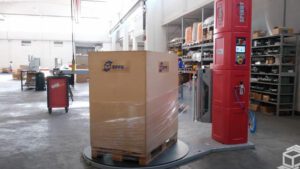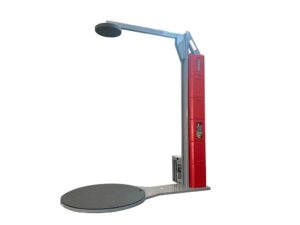
Pallet wrappers are essential for the safety and efficiency of industrial packaging. Yet, many companies, in an effort to keep costs down, consider purchasing a used model. This option may seem convenient on paper, but in practice, it often translates into unexpected expenses, reduced productivity, and operational risks.
Today, when load stability and process traceability are crucial – even to avoid losing precious goods Choosing a used pallet wrapper can compromise the quality, safety, and even continuity of your work. This is exactly the opposite result companies should be aiming for.
The risk behind saving on pallet wrappers
Choosing a used wrapping machine may seem like a cost-effective option, but the hidden costs often outweigh the initial savings. Since the machine has been in use for years, components may no longer be upgradeable, or performance may have deteriorated. This can lead to downtime, winding defects, and excessive film consumption. Hidden costs, in fact: not immediately visible, but very tangible in the final analysis.
Furthermore, second-hand pallet wrappers don't always comply with the latest safety standards: for example, photocells may not be calibrated, or soft start or emergency stop systems may be missing. These shortcomings can turn a daily operation into a risk for operators. And especially in industrial or logistics contexts where volumes are high and cycles are continuous, every minute lost in maintenance or restarts translates into direct costs.
New pallet wrappers are an investment, not an expense
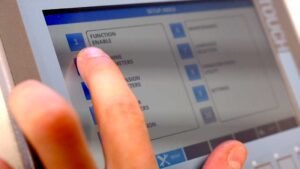
Therefore, choosing a new model means ensuring continuity, efficiency, and safety. Modern pallet wrapping machines are designed to integrate into increasingly digital production processes, with touch control systems, automatic tension adjustment, and pre-stretch functions that significantly reduce film consumption.
Furthermore, the latest generation machines are prepared for Industry 4.0, which allows you to monitor parameters such as cycles, times and consumption, as well as schedule predictive maintenance.
This is even more true for companies that handle heavy flows, such as logistics, large-scale retail trade, or consumer goods manufacturers: these businesses have everything to lose by relying on a used machine.
Imagine a warehouse that wraps hundreds of pallets a day: a single unscheduled stoppage can halt entire shipments. Or consider a food company that must ensure perfectly stable loads for refrigerated transport: incorrect tension or unevenly distributed film can compromise product quality.
Even for smaller businesses with moderate volumes, a new machine ensures greater versatility. Models like those offered by Effe3Ti, available in both semi-automatic and automatic versions, adapt to small spaces and different pallet types, offering consistent performance and optimized energy consumption.
How to choose the right pallet wrapper for your business
Choosing the right pallet wrapper depends on the type of product, packaging volumes, and efficiency goals. Semi-automatic versions are ideal for warehouses with variable workloads and dedicated operators, while automatic wrapping machines They represent the perfect solution for continuous production lines.
It is also important to consider safety and connectivity aspects. The new generation Effe3Ti machines, such as those equipped with the Datalogger.2, integrate digital remote control and data collection functions, ensuring maximum reliability over time.
Furthermore, relying on new machines means being able to benefit from the latest product innovations. Effe3Ti also offers a wide range of wrapping robots: they move automatically, making a critical operation like winding even simpler.
Safety, quality and economic return
New pallet wrappers shouldn't be considered an expense, but rather a strategic investment: they ensure consistent packaging, reduce material waste, and lower the risk of accidents.
Those who choose Effe3Ti invest in machines designed to last, compliant with the latest safety regulations, and ready for digital integration. Because at the end of the line, as at every crucial point in the supply chain, saving today with a used machine can mean spending more tomorrow.